
Waypoint 6 – Recreation Ground
Discover Topsham’s Roman fortlet by stepping back nearly two millennia to uncover the hidden story beneath Topsham School.
In the year 2000, archaeologists revealed the remains of a Roman fortlet dating from around AD 50–75 — one of the earliest military outposts in the region.
Perched on top of a low cliff, the fortlet once commanded sweeping views over the River Exe, which flowed much closer to the cliff edge than it does today. Controlling the river was a key strategic advantage for Roman forces, allowing them to monitor movement and respond quickly to threats. In times of danger, a rider could gallop to nearby Isca (modern-day Exeter) to alert the garrison.
Though the exact layout remains a mystery, evidence suggests the fortlet featured defensive ditches, internal buildings, and likely a watchtower overlooking the river. The illustration here offers a glimpse into what it may have looked like.
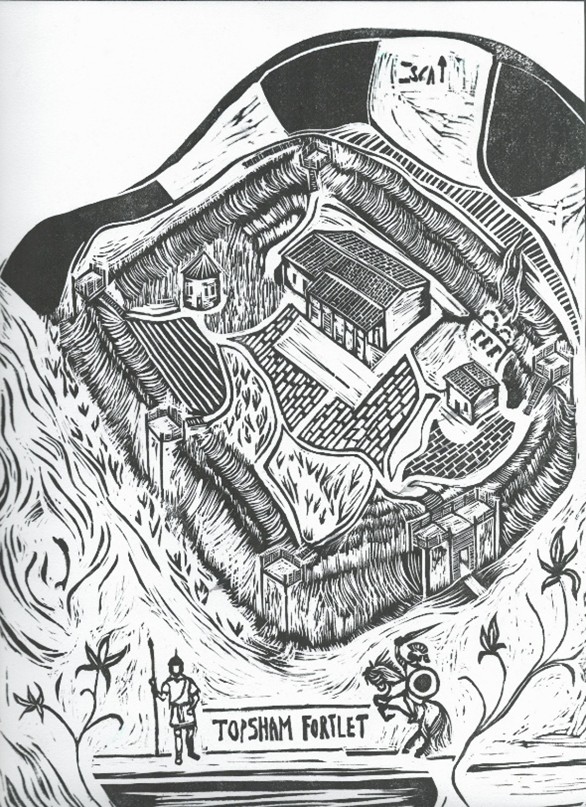
By AD 75–80, the Roman army had moved on, leaving Topsham to grow as a small township under Exeter’s authority. Yet Roman life lingered — two burial sites have been found nearby: one cremation discovered beneath the M5 motorway, and a small cemetery of 14 graves near the fortlet itself.
Roman occupation continued in Topsham until the 5th century, when the area was gradually given over to farming. Settlement shifted southwards, shaping the heart of the town we know today.
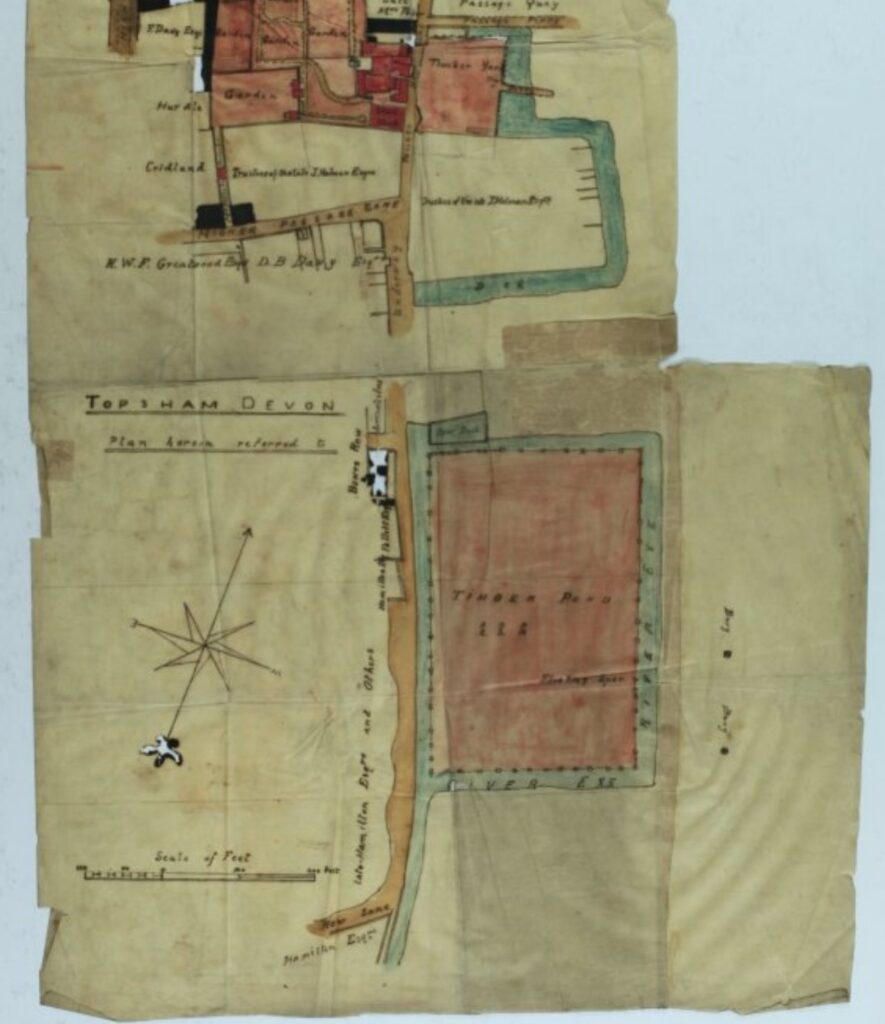
Today’s Recreation Ground is mostly reclaimed from the river. It was once Follet’s timber pond which was filled in by Herbert Holman to become a public amenity which opened in 1908.
The War effort
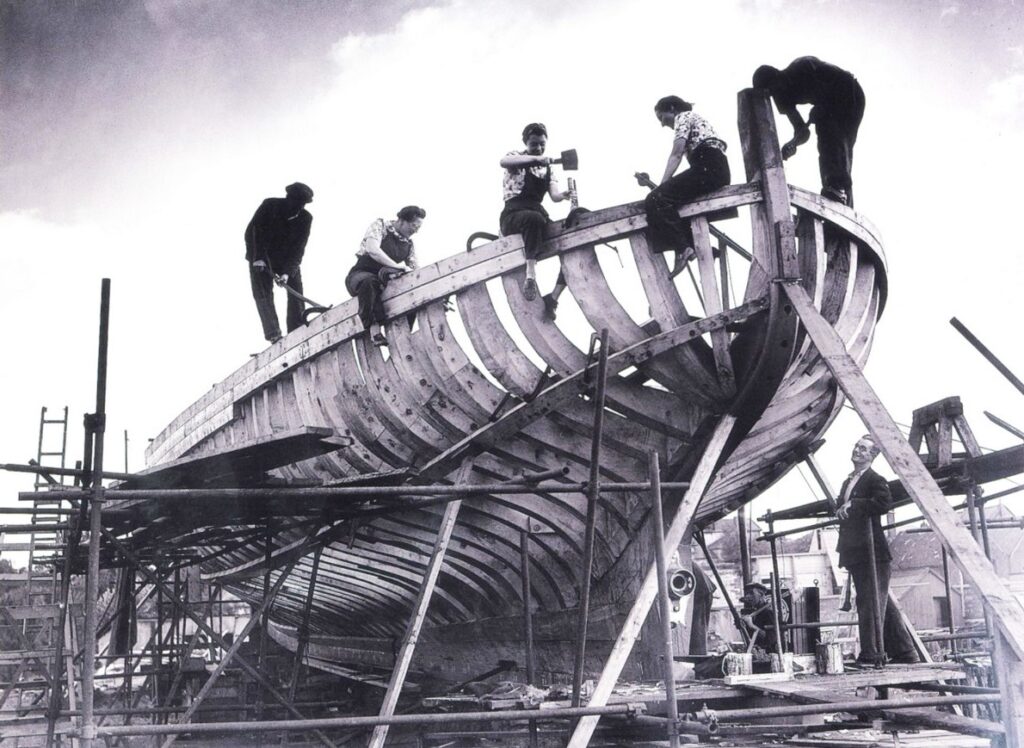
Topsham’s shipbuilding legacy stretches back through the centuries, with its craftsmanship recognised even in modern times. During the Second World War, the Royal Navy commissioned hundreds of motor fishing vessels (MFVs) from shipyards all over Britain. MFVs were mostly 50-ton vessels, each equipped with a single machine gun.
Six vessels, numbered MFV 151 to 156, were constructed near this spot by Stanbury Shipbuilders (Topsham) Limited. Crafted entirely from oak sourced in Devon and Somerset, each took approximately two years to complete.
Get back onboard to sail downstream to the next stopping point
Turn back down Ferry Road all the way to the Passage House Inn, turn left up Exe Street and turn right at the top. Look out for the sign on a post on the corner of Exe Street and Fore Street.
