
Waypoint 2 – Underway
Newfoundland Cod fishing
Topsham’s historic fishing links went far beyond the Exe.
In 1497 John Cabot sailed from Bristol and came upon a ‘new found land’ on the North Atlantic coast of America. Later, Sir Humphrey Gilbert, (Sir Walter Raleigh’s half-brother), founded an English colony named Newfoundland. Long before Gilbert’s arrival, the cod-rich sea was a destination for fishing and trade ships. The sea off this coast became famed for its cod.
Ships then began to carry settlers. Along the coast, purpose-built fisheries known as ‘fish factories’ or ‘fish rooms’ appeared. As cod fishing expanded, the Newfoundland trade became controlled by a small number of West Country merchant-venturers, known as the ‘Western Adventurers.’ They had power and wealth which brought influence. Trade was mostly triangular. Topsham ships brought cured fish to Mediterranean countries. Ships then returned to the South-west laden with olive oil, wine and luxury goods. This trade continued right up to the 19th Century.
River Exe Salmon
Until recently, the town of Topsham was famous for its salmon fishing. Imagine teams of rowing boats racing out onto the River Exe, each hoping to catch the biggest fish using a method called seine net fishing. These special nets had weights at the bottom and corks at the top so they floated in the water. Fishermen would throw the nets from their boats to trap salmon, then pull them back in to the shore.

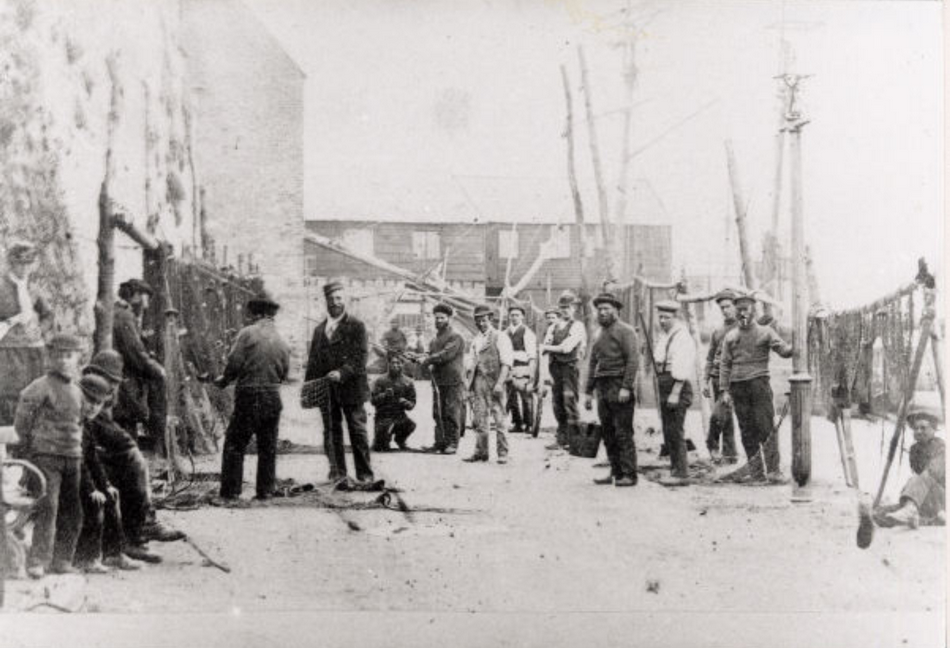
Back in 1910, there were 31 licensed fishing boats in Topsham, each with five hardworking fishermen aboard. Up to the late 1960s, if you’d walked along Underway, you would have seen tall wooden poles and racks where nets were hung out to dry in the sun. But over time, fewer salmon were swimming in the river. Due to overfishing by commercial trawlers out at sea, compounded by pollution and disease, stocks began to dwindle. In 2018, the UK Environment Agency decided to pause fishing for ten years to help the salmon stocks return. By then, only one boat remained. The ban marked the end of a proud tradition. The nets were packed away, and Topsham’s salmon fishing—once a bustling part of everyday life—became another memory of the town’s rich maritime past.
Make way to the next stopping point
Head along Underway to the corner of the building in front of you where you’ll see a lamp post marking Waypoint 3.
