
Waypoint 4 – Ferry & Canal
Topsham Ferry
A ferry crossing at this point has been recorded since ancient times. The role of ferryman was often held by seasoned mariners—men who, after long careers at sea, chose to stay connected to the water by serving as Topsham’s ferryman. Over the years, many such individuals have taken on this custodianship, continuing a tradition steeped in maritime heritage.
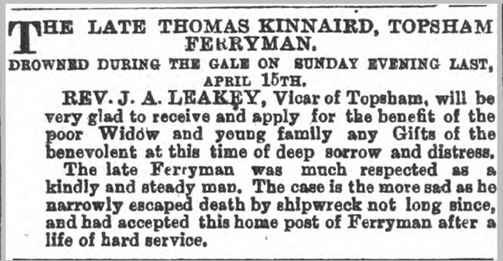
Yet, like many boat-related professions, it was far from safe. In April 1877, a violent storm swept across Britain, claiming numerous ships and lives—including that of Thomas Kinaird, Topsham’s ferryman. Torrential rain and storm-force winds made the ferry unmanageable, and Kinaird was tragically drowned in the attempt to navigate it.
The ferry still operates today. As you cross, spare a thought for those who brave the elements to keep you dry.
Topsham Canal
The upper reaches of the River Exe were too shallow for heavily laden ships to reach the heart of Exeter. In contrast, Topsham’s deeper channel and more favourable tides made it an ideal outport. Its purpose-built quay allowed for easier unloading, increasing its importance in regional trade.
Topsham had been granted by the King to the Earl of Devon, giving the Earl the right to profit from incoming goods. Between 1239 and 1245, Countess Isabella de Fortibus, who was also the Earl’s wife, took bold action to boost their income. She ordered the river upstream to be blocked with “great, thick and strong timber.” This deliberate obstruction prevented ships from sailing directly to Exeter, securing Topsham’s future as a thriving port.
Exeter didn’t regain control of its maritime trade until the 1560s. In 1563, engineer John Trew was commissioned to build a canal that bypassed the weir. Its original section (Topsham to Countess Wear Swing Bridge) was 1.5 miles long and is believed to be Britain’s first canal with a pound lock. The canal was later extended towards Exeter to the modern M5 motorway and then seaward to Turf Lock in 1829. However, the canal’s success came at a cost to Topsham — sea-borne goods now flowed directly to Exeter, bypassing the town and sparking local resentment.

Full steam ahead for your next waypoint
Continue along Ferry Road until you spot a post outside a house called Furlong.
